




You are viewing 1 of your 2 free articles
Cost and disruption fears due to Iran war send monthly travel spend into further decline


Travel spend fell by almost 6% in April as a direct consequence of the Iran war – almost double the decline seen in the previous month.
New Barclays consumer card spend data shows the amount spent with travel agents dropped by 7.5% even though transactions rose by 5.9%
Airlines saw spend descend by 8.3% as transactions dropped by 4.5%.
Total travel spending declined by 5.7% in the month, after a 3.3% fall in March with bookings impacted by cost and disruption concerns.
Consumers cite worries about travel costs (70%) and travel disruption (62%) in light of the Middle East conflict, Barclays noted.
One in six (16%) say they are putting off holiday decisions until they feel the outlook has stabilised.
However, despite cost pressures, 13% say they are still prioritising travel and holidays this year.
One in five (19%) are planning a staycation, with saving money (43%), reducing the risk of uncertainty (35%) and avoiding air travel (24%) contributing to their decision, the bank found.
The picture emerged as Barclays revealed a 0.1% year on year decline in card spending last month – the first fall since a 0.5% drop in November 2024 and below the latest CPIH inflation rate of 3.4%.
Non-essential spending declined by 0.3% after a 1.1% increase in March, but essential spend grew 0.3%, as fuel surged 10.4% – its greatest rise since December 2022.
Consumers’ confidence in their household finances and job security both remained largely on par with March, dipping by one percentage point to 64% and 43% respectively.
But confidence in non-essential spending dropped to 49%, its lowest level since March 2023.
Almost seven in 10 (72%) say they expect tensions in the Middle East to impact the cost of living throughout 2026, with energy bills (85%), inflation (84%) and food prices (84%) the greatest causes for concern.
Confidence in the global economy fell to 20% to its lowest since April 2025, when US president Donald Trump announced ‘Liberation Day’ tariffs.
However, confidence in the UK economy recovered marginally by 1% to 22% from March.
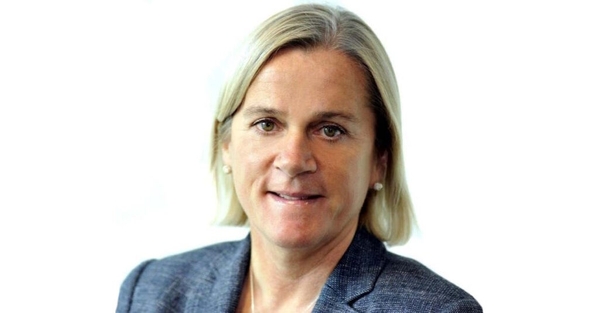
Karen Johnson, head of retail at Barclays, said: “In April, we saw consumers taking precautionary action in response to renewed cost-of-living concerns – cutting non-essential spending, building their savings and looking for ways to reduce their outgoings.
“There’s no doubt people will continue to pay close attention to their budget amid ongoing uncertainty, however it’s reassuring to see that the majority feel confident in their ability to manage their day-to-day spending and to make sound financial decisions.”
Barclays chief UK economist Jack Meaning added: “This data shows consumers are already adapting in response to the shock from the Middle East, for instance, by building up a savings buffer.
“With uncertainty high both at home and abroad, it is unsurprising to see confidence falling.
“The key unknown for the UK outlook is how long this uncertainty will last. If confidence remains subdued for too long, and consumers continue to limit their spending as a result, it will be a challenge for households and businesses to weather the storm.”
More Content












More Content





Jacobs Media is a company registered in England and Wales, company number 08713328. 3rd Floor, 52 Grosvenor Gardens, London SW1W 0AU
© 2025 Jacobs Media
