




You are viewing 1 of your 2 free articles
Package holidays ‘gold standard in turbulent times’ despite shift in booking behaviour, Tui insists

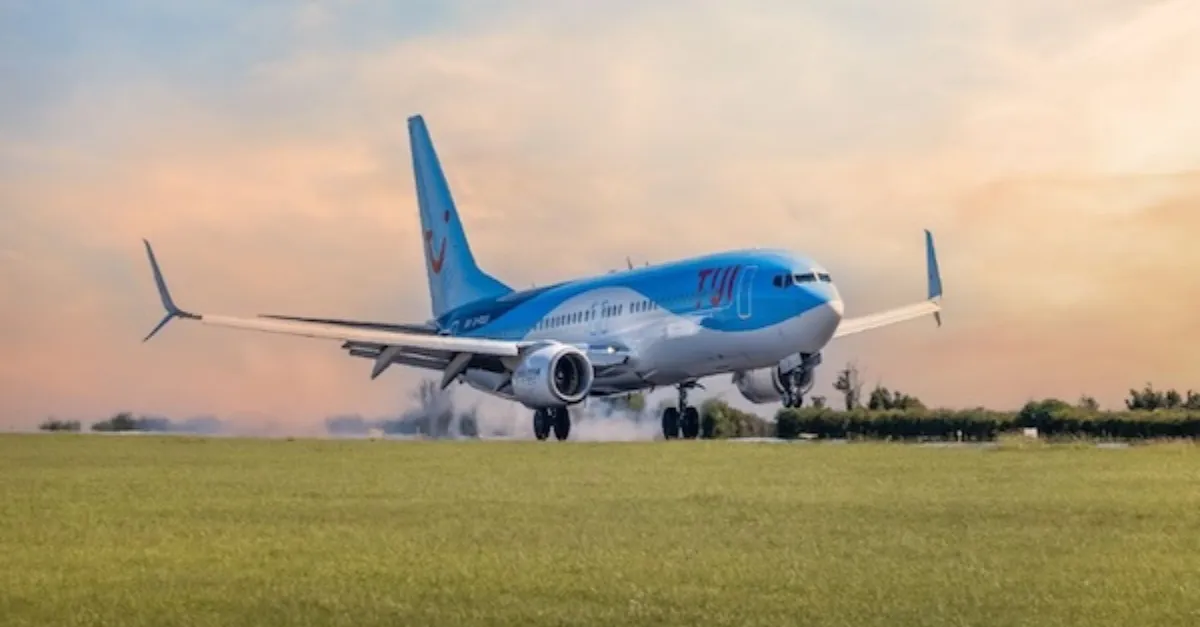
Tui Group today confirmed that a shift in consumer booking behaviour “is evident” for the summer due to the impact of the Iran war.
Figures from Europe’s largest tour operating group and the overall market show a trend toward strong last-minute bookings, particularly to western Mediterranean countries.
Group chief executive Sebastian Ebel, confirming a revised financial outlook for the year issued last month of €1.1 billion to close to the previous 12 month’s level of €1.4 billion, insisted that the package holiday remains the “gold standard” especially in “turbulent times”. Tui temporarily suspended its revenue forecast for the year.
The comments came as Tui cut winter half-year losses by €45 million to €111 million despite the impact of the Iran war costing €40 million and Hurricane Melissa in Jamaica €5 million. The number of holidaymakers carried in the first six months of the financial year rose by 0.2 million to 12.8 million.
Underlying losses for the second quarter were trimmed by €19 million year on year to €188 million in what Tui described as traditionally a weaker period for the tourism industry, despite one-time charges resulting from the Iran conflict of €40 million as revenue rose by 1.3%.
Tui’s northern region, comprising the UK, Ireland and the Nordic countries, saw underlying second quarter losses reduced from more than €182 million to €157.5 million.
Tui said: “As in the previous year, just under half of consumers planning a vacation have not yet booked for this season.
“In addition, demand is shifting from destinations in the eastern Mediterranean to those in the western Mediterranean.
“Spain, including the Balearic and Canary Islands, as well as Greece, will be the most popular destinations this summer.”
More than half of the company’s available capacity for the summer has been sold.
“Despite the challenges posed by the war in Iran, the focus remains on the growth of differentiated products and dynamically packaged holidays,” the group added.
“Utilising our own asset capacity is the priority. This approach is supported by our cost-reduction and efficiency-improvement programmes. At the same time, higher average prices are expected to help partially offset the increased cost level.”
More: Tui chief joins travel reassurance calls
The improvement was driven by a shake-up in its markets and airline business area as well as strong demand for cruise.
Tui described demand for cruise holidays a remaining “robust” in the second quarter, with underlying profits from the division of €80 million, despite charges of €20 million related to the war in Iran.
The cruise segment improved first-half underlying earnings by 25.9% to €163.5 million, “which underscores the strong demand for cruises as well as the robust operational performance”.
The average daily rate across all cruise brands improved by 2% to €223 despite the Iran war, and available capacity rose by 10% to 2.9 million.
Ebel said: “Tui has seen growth in operating profit for the 14th consecutive quarter. This reflects the group’s ongoing transformation. The very strong results give us confidence for the second half of the year.”
But he added: “Due to geopolitical challenges and dynamic market conditions, it will require great dedication and flexibility.
“We offer our customers a high level of security and quality, especially in turbulent times. Package holidays remain the gold standard.
“Our focus is on our differentiated products with their strong brands. That is our strength - from booking and hotels to the on-site experience.
“Thanks to the new organisational structure with a COO who has overall responsibility, we can leverage synergies - differentiated products for our sales teams and a strong sales force to ensure optimal utilisation of our assets - even more consistently.”
Asked about aviation fuel for the peak season in July and August, Ebel said: “We see no shortages for the next weeks, and I would also see no impact in the summer at all, except prices – and for the higher prices, we are luckily hedged.”
He noted how more oil is now coming from countries such as Nigeria and Saudi Arabia, and capacity at refineries in countries such as Germany has been increased.
“We are not only optimistic, I am very much convinced that we will see no shortage in summer and for the next 10 weeks, there is definitely enough fuel. It’s more a question of price,” he said.
“I am convinced that there will be no shortage. That’s why, despite the capacity cuts we made, we don’t think about any other cancellations of flights.”
He also reiterated the fact that there are no plans to bring price increases to customers who have booked already.
Ebel described artificial intelligence as “an opportunity” for the travel and tourism industry, adding: “We are already using AI across the group.
“We offer our customers a high level of security and quality, especially in turbulent times. The package holiday remains the gold standard.
“From the strategic development of business segments to operational practice, at Tui, AI is not viewed as a tool but as a way of working; it is an integral part of product development that increases efficiency, promotes customer proximity, and, above all, makes service even better and faster while enabling additional sales channels.
“For example, we collaborate with Google and ChatGPT and offer AI dialogue functions in our app.
“Digital services, AI, and personal advice at the travel agency complement each other.”
Group chief financial officer Mathias Kiep added: “Our strong results in the first half of the year show that we can successfully offset the financial burdens from the war in Iran and Hurricane Melissa in Jamaica.
“Tui is resilient. Despite all the challenges in the world, we are looking forward to the second half of the year with confidence.”
The group’s holiday experiences division, comprising hotels and resorts, cruises and Tui Musement, generated improved underlying earnings of €176 million in the second quarter but would have been €20 million higher excluding the impact of Middle East disruption.
The revamp of the markets and airline segment, including tour operators, sales and Tui’s airlines, yielded a 7% improvement over the same period last year with a loss of €339.5 million.
“The strong result in this traditionally negative quarter is attributable to operational efficiency improvements and a reduced cost base,” Tui noted.
“In a highly competitive environment, the business area benefited from sustained demand for differentiated products and dynamically packaged holidays.
The share of sales via the Tui app also “rose sharply” by 20% compared to the same quarter last year. As a result, app sales accounted for 11.4% of total revenue in the second quarter of the financial year.
Looking forward, the group said it “remains committed to its successful strategy”, adding: “The outlook adjusted in April is based on the current booking environment for the summer season, the expectation that there will be no material escalation of geopolitical tensions, and that fuel supplies can be maintained.
“The group’s strong financial position and robust balance sheet ensure it is well-positioned to respond to the current market environment and continue its strategic transformation.”
More Content











More Content






Jacobs Media is a company registered in England and Wales, company number 08713328. 3rd Floor, 52 Grosvenor Gardens, London SW1W 0AU
© 2025 Jacobs Media
