




You are viewing 1 of your 2 free articles
Expedition specialists urge agents to seize ‘tremendous opportunity’ in growing sector

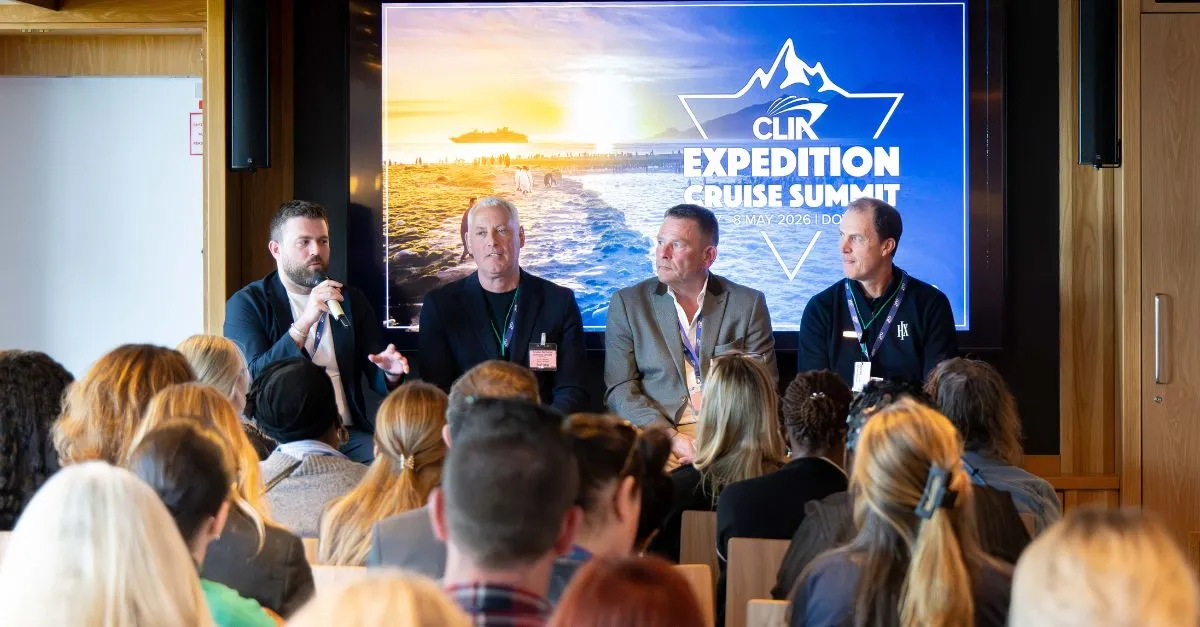
Expedition specialists have urged agents to capitalise on growing opportunities in the sector and target non-cruise customers.
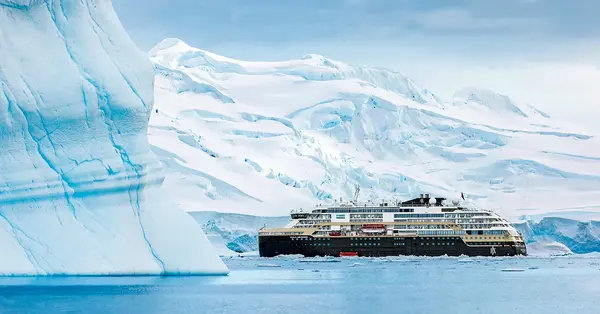
A total of 90 delegates, including agents, operators and tourist boards, were hosted on board HX Expeditions’ MS Fram in Dover for Clia’s third annual Expedition Cruise Summit.
Clia UK and Ireland managing director Andy Harmer revealed “impressive” growth figures for the sector from UK passengers last year, with expedition cruise to “key exploration destinations” such as the polar regions and Galapagos outpacing growth in mainstream cruise.
Harmer said: “The growth in general cruising last year was about 6%, while exploration destinations saw a 12.3% increase.
“That is a huge level of growth and double the growth we have seen in normal cruising, which is down to lots of new expedition cruise lines joining Clia, but also lots of travel agents focusing on expedition in a way they have never done before.”
On a later panel, expedition operator sales chiefs answered questions from agents to help dispel misperceptions about the sector.
Andrew Magowan, vice-president of sales and marketing for EMEA at 66 Expeditions, said people who took mainstream cruises were “not necessarily the target market” for expedition, recommending agents to look at adventurous travellers and start with selling the Arctic before Antarctica.
“It’s not cruising really as it’s about the destination and not the ship,” he said. “It’s much more about adventure and that really is your target market.”
Luke Clarke, senior sales director for the UK, Ireland, Africa and India at Swan Hellenic, said that “regardless” of whether it was a luxury ship or not, an expedition was a “super social” experience.
“The guests are on board for a purpose and they are not cruisers, so please don’t send us someone who is used to big ships,” he said. “They’ve come to see and learn about the destination and you will see an extremely social environment on board all of the ships.”
Echoing this point, HX Expeditions’ UK and Northern Europe director of sales Mark Walter said 90% of passengers in the operator’s Antarctica season the year before last were new-to-brand and new-to-destination, showing it was not a trip that should be solely targeted at people with previous cruise experience.
Anthony Daniels, Ponant’s UK and Ireland general manager, urged trade partners to consider destinations outside the polar regions and drill down into their own database to find adventure travellers.
“One of the challenges is some guests do not like the cold so what you can look at is products in Europe, coming out of the UK, in the Mediterranean or down in Australasia or places like that,” he said. “It’s not just polar and there are a lot of warm-water opportunities.”
He added previous safari or touring customers would be a good “cross-over”, as well as those interested in “enrichment” based holidays.
Polar Latitudes’ chair John McKeon and HX Expeditions’ vice-president of sustainability and industry relations Tudor Morgan spoke about the history of expedition in Antarctica and the work of trade body IAATO in building strict regulation to protect the region.
McKeon said since its founding IAATO had grown from seven operators to 51 who were dedicated to “preserving” Antarctica for future generations.
He added there was “tremendous opportunity” for agents who should be reassured that the industry has “values” and is “effectively doing something” for the environment.
McKeon said: “I would encourage you all to spend as much time as you can learning about the place, the companies that go there and make your choice.
“Because of the way Antarctica is managed, we all go to the same sites, we all see the same whale and the same penguins, so really what it comes down to is success is in the margins.
“It comes down to who you want to travel with, and each company stakes its own lane.”
McKeon also recommended agents to consider multi-generational groups for expedition travel, adding: “What we are discovering, and this might be interesting for you commercially, is that more and more multi-generational groups want to travel and experience together.
“We used to have on-board programmes where we say we don’t want kids, but now we’re welcoming kids because we think it’s really important to teach people about this place in the future.”










Jacobs Media is a company registered in England and Wales, company number 08713328. 3rd Floor, 52 Grosvenor Gardens, London SW1W 0AU
© 2025 Jacobs Media
