




You are viewing 1 of your 2 free articles
Q&A: Adrian Ghaui and Mark Gillies, NawiriGroup

Two experts reveal what agents should look for when booking a sustainable safari

Click here to download and save as a PDF
Q. As a specialist safari operator, what is NawiriGroup’s mission?
Adrian: Our ambition is to show how travel can be a force for good while having a world-class product with a low environmental footprint, plus meaningful impact on local communities.
We published our 2024-25 Impact & Sustainability Report at the turn of the year, and we’ll soon begin gathering data for our 2026 report, which comes out in autumn.
Q. What are some of the sustainability concerns surrounding Africa safaris?
Adrian: There are lots of people doing lots of good things, but overcrowding in the Serengeti last year showed it’s possible to have too much of a good thing – especially with the current rate of development. How many thousands of acres of the Serengeti are being cleared to put in properties?
Every camp sinks a borehole, so at what point are we impacting the groundwater supply and undermining the ecosystem?
Q. Do you work with UK agents?
Adrian: Our tour operator Asilia Africa has camps and lodges across southeastern Africa – we’ve introduced Uganda this year, with the new Erebero Hills camp. We have another subsidiary, Go2Africa, which predominantly sells safaris.
Mark: The vast majority of our sales are through the trade, so we work with a wide variety of tour operators such as Audley Travel, plus hundreds of individual agents.
Q. What should agents look for when booking a safari?
Adrian: If a supplier is saying something vague, like ‘carbon-neutral safari’, that’s a bit of a red flag. If they are really doing it, they will have a lot more to say to substantiate it.
Another litmus test is cultural interaction. Progressive operators are doing fewer performative experiences and more equal exchanges of information on cultural tours – ie, more than going to a village and buying some beads.
Mark: If people are honest in their position and committed to doing the best they can, they will talk openly about the challenges they face, the aspirations they have and where they are on the journey.
Q. How does Nawiri keep track of its environmental impact?
Adrian: We measure our impact both internally and externally. When we talk about internal impact, that’s asking what is the environmental footprint of our camps and other operations? How do you minimise the environmental cost of bringing someone to have these experiences?
We also think about how we impact the people who work for us – we want to create high-quality jobs, be a diverse employer with equal opportunities and offer high social mobility. There are lots of jobs in the industry, but you can get unequal relationships in employment that mean local people who are closer to these ecosystems and places aren’t really getting a fair share of the value creation.
We were the first B Corp in Africa and are in the process of renewing our certification right now, and we like being part of that community. But in some ways, the question is beyond B Corp: what else should we be doing and where are the gaps?
Q. What are your goals for the future?
Adrian: With safaris, you can reduce most of your greenhouse gases. We know where they come from – diesel cars and diesel generators – and we can fix that with solar power and electric vehicles. We’ve now got nine electric vehicles, but we must transition our whole fleet to EVs. We have big goals to restore degenerated land too.
We’re the primary funder of about 2,700 square miles of East African land currently operating under a community-led conservation model, but we’re looking at funding up to 7,500 square miles in the next couple of years.
Mark: This can help agents convert a booking. For instance, EVs are quieter – so clients wouldn’t be disturbing an elephant that happens to be passing by or a buffalo sniffling along in the grass.
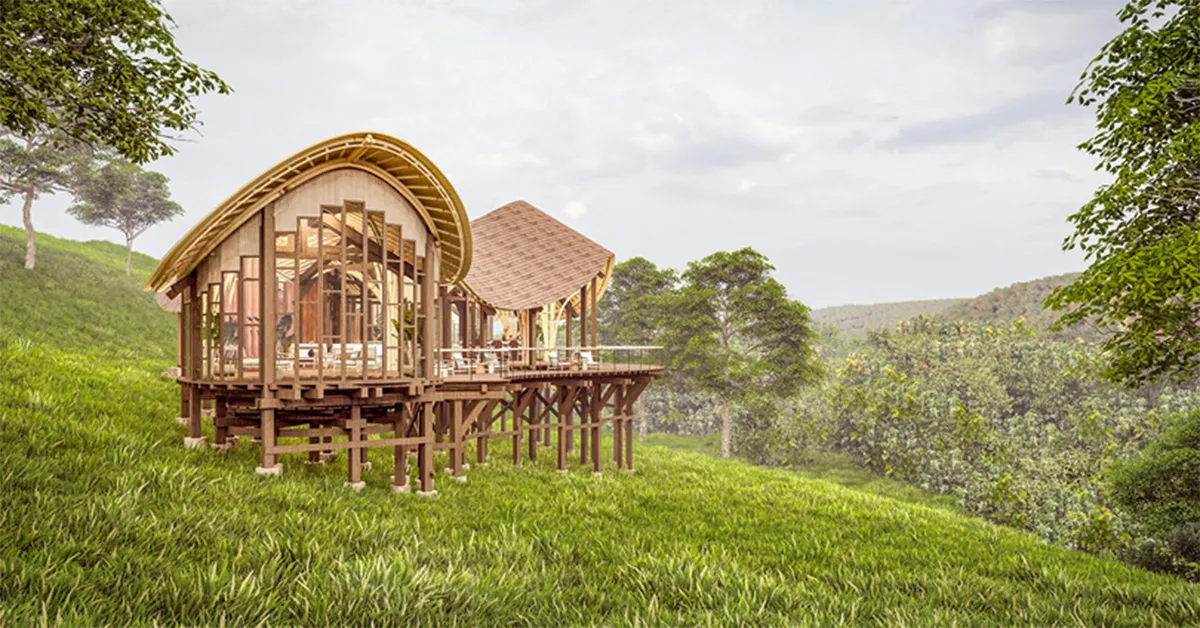
New safari camp
Erebero Hills camp in Uganda will open in August, set on a ridge overlooking the Bwindi Impenetrable Forest, home to more than half the world’s gorilla population.
The camp will offer eight suites, each with private viewing decks of the forest, plus common areas including a pool and lounge.





Jacobs Media is a company registered in England and Wales, company number 08713328. 3rd Floor, 52 Grosvenor Gardens, London SW1W 0AU
© 2025 Jacobs Media
